How to Prepare for Your First Photography Session (So You Actually Enjoy It)
I spent ten years in front of cameras before I ever stood behind one. Catalog shoots, athlete profiles, brand campaigns — I was the one being directed, being told where to stand, trying to figure out what to do with my hands while someone I just met pointed a lens at my face.
Some sessions were great. I left feeling like the photographer saw something real and caught it. Others were painful — stiff direction, awkward silence, an hour of performing and walking away hoping something in the batch looked natural.
That gap is why I do what I do now. And it’s why most advice about how to prepare for a photography session misses the point. The internet will tell you what to wear and when to book your haircut. That stuff matters. But the things that actually determine whether you love your photos happen before and during the session, not in your closet.
Here’s what I wish someone had told me before my first shoot — and what I tell every client before theirs.
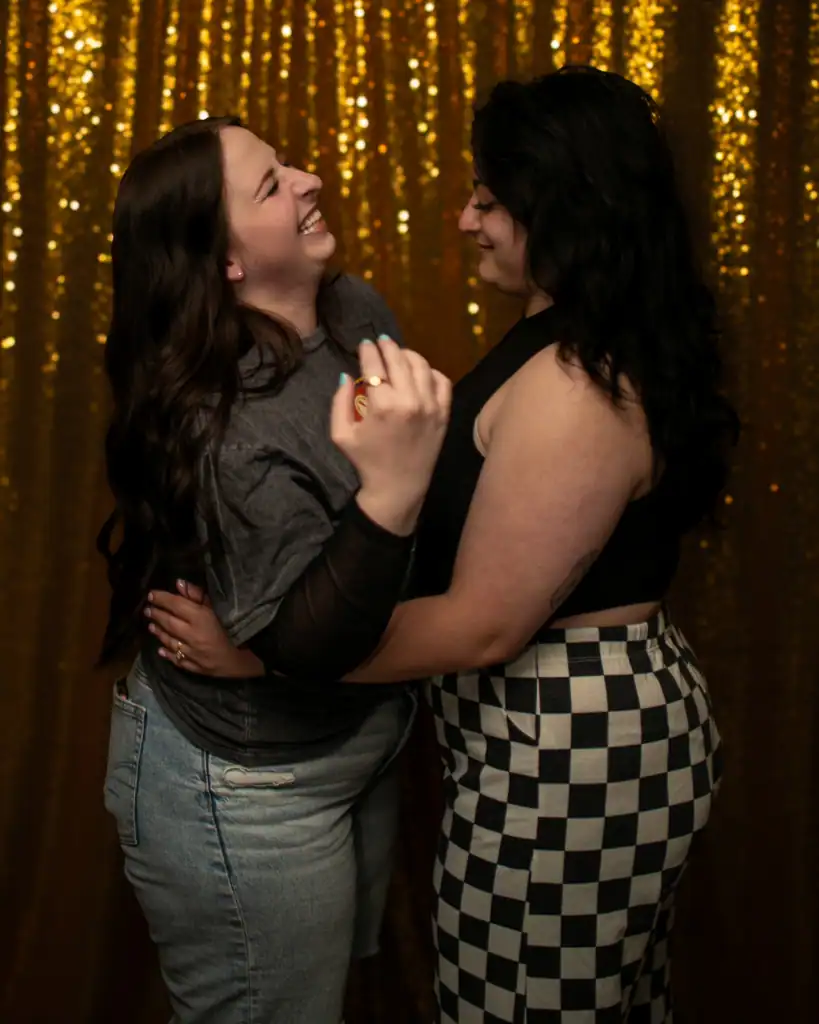
Before the Session — The Practical Stuff That Actually Matters
Let’s get the logistics out of the way. This is the checklist, and I’ll keep it tight because the next section is where the real value lives.
Wear what makes you feel like yourself. Not what a Pinterest board told you to wear. The outfit that makes you stand up a little straighter when you put it on — that’s the one. Solid colors and layers give us options. Avoid logos and busy patterns that pull focus. Bring a second outfit if you want variety. The real rule: if you wouldn’t wear it to dinner with someone you wanted to impress, leave it on the hanger.
Handle grooming early. Haircuts and color, one to two weeks before the session. Not the day before — you want it settled, not fresh. Same goes for nails, facials, whatever makes you feel put together. Give everything a few days to land.
Trust your photographer on timing. There’s a reason I book sessions in the last hour or two before sunset. That golden hour light does more for your skin, your eyes, and the overall warmth of the image than any edit I could make afterward. When I say we’re starting at 6:45, that’s not arbitrary — that’s when the light turns on.
Let the photographer pick the location. Unless you have a spot that means something to you — where you got engaged, your family’s land, a corner of Tulsa you love — let your photographer choose. We know where the light works at every hour and every season. I’ve shot every park, parking garage, and Art Deco building in this city, and I know which ones deliver at 7 PM in October versus 8 PM in June.
What to bring: Water, a phone charger, and a playlist that puts you in the right headspace on the drive over. That’s it. You don’t need props, mood boards, or a list of poses from Instagram. That’s my job.
This checklist gets you to the session prepared. What happens next is the part most people don’t talk about — and it’s the part that actually shapes your photos.
During the Session — What Actually Happens (From Both Sides of the Lens)
Nobody tells you this: the first ten minutes of a photography session are supposed to feel awkward.
I know because I spent years being the awkward one. Standing in front of a photographer I just met, trying to look natural while feeling anything but. Wondering if I was making the right face. Wondering why I couldn’t just relax.
Then at some point — usually around the fifteen-minute mark — something shifted. I stopped thinking about the camera. The photographer said something that made me laugh, or gave me direction that had nothing to do with my face, and I was just there. Present. Not performing.
That shift is the whole session. Everything before it is warmup. Everything after it is where the real images live. As a photographer now, with a decade on the other side of the lens, my entire job is getting you to that moment as fast as possible.
The early frames are calibration, not keepers. I’m adjusting exposure, watching how you move, figuring out what kind of direction you respond to. You’re loosening up, settling into the space, getting used to the camera. Nobody’s expecting perfection from those first ten frames.
Direction is a conversation, not a command. Bad direction sounds like “tilt your head 15 degrees to the left.” Good direction sounds like “look over my shoulder like you just saw someone you know” or “walk toward me and pretend I’m not here.” I learned the difference by being on the receiving end of both for years. Mechanical direction makes you stiffen up. Story-based direction makes you forget there’s a camera at all.
You don’t need to know how to pose. That’s what you’re paying me for. What actually helps is movement — walking, adjusting your collar, looking off to the side and looking back. Movement creates natural moments between the poses, and those in-between frames are almost always the best ones in your gallery.
Say something if it’s not working. If the outfit feels wrong, tell me. If you’re stuck in your head, say so. We’ll take a walk, switch locations, change the energy. I’d rather pivot than push through a session that isn’t landing.
The best frames happen in the last twenty minutes. By then you’ve stopped thinking about the camera. You’ve stopped managing your expression. You’re just being yourself, and I’m catching it. The warmup was the price of admission. The clients who trust the process and stay loose through the first half always love the second half.
How to Prepare for a Photography Session You’ll Actually Want to Revisit
The real preparation isn’t logistical. It’s mental.
Trust the process. You hired a professional for a reason. The nerves are normal — I felt them every time I showed up for a shoot as a subject, even after years. The awkward phase is normal. The part where everything clicks is coming.
Let go of the perfect shot in your head. The best images from your session will be the ones you didn’t plan. My favorite frames from my own years in front of the camera were always the in-between moments — adjusting a collar, laughing at something stupid, looking away right before the shutter fired.
Consider film. If you want images with a warmth and weight that feel different from everything on your phone, ask about shooting on 35mm. I load my Minolta STSi Maxxums with CineStill 800T or Kodak Ultramax and we work through 36 frames with no burst mode and no safety net. The constraint changes the session — everything gets more deliberate. You feel it while we’re shooting, and you see it when the scans come back.
The best photography sessions don’t feel like photoshoots. They feel like a conversation that happens to produce images worth framing. Show up, settle in, and somewhere around the twenty-minute mark you’ll forget you were nervous. That’s where the real photos live.
Want to see what a relaxed session looks like? Browse the portfolio. Ready to book yours? Let’s connect.

Last October I stood on a ridge at Turkey Mountain with my Minolta STSi Maxxum loaded with CineStill 800T, watching the Arkansas River valley turn amber below me. The sun was maybe ten minutes from gone. I had one frame left on the roll.
Oklahoma golden hour doesn’t look like golden hour anywhere else. We sit in the transition zone between the humid South and the dry High Plains, and that mix of moisture and dust scatters light heavier than what you get out West or across the flat Midwest. The golds run deeper. The purples at the edges hit harder. And when a spring storm clears out an hour before sunset — which happens here more than people realize — the sky turns into something no preset in Lightroom could touch.
I’ve shot all over Tulsa on film and digital, and these are the five best golden hour photography locations in the city — where to stand, when to show up, and why the light behaves the way it does at each one.
Woodward Park and the Rose Garden
Woodward is the first Tulsa golden hour photography location I recommend to anyone who asks.
The move is the koi pond at sunset. Position your subject between the pond and the western sky, and the low-angle light backlights them while the water throws a warm reflection up from below. You get this wrap of golden light that fills in shadows naturally — no reflector, no flash, just the pond doing the work.
The park has layers beyond the pond. Nine thousand roses in the garden beds add color and texture without competing with your subject. The limestone rock gardens give you a different backdrop thirty seconds away. And the Garden Center — an Italian Renaissance mansion with deep colonnades and arched entries — catches raking light in a way that makes Midtown Tulsa feel like the Italian countryside for about twenty minutes every evening.
When to go: March for the tulip tree blooms. June and July for peak roses. October and November for fall color. Commercial shoots require a small permit — check with the park office before showing up with a client.
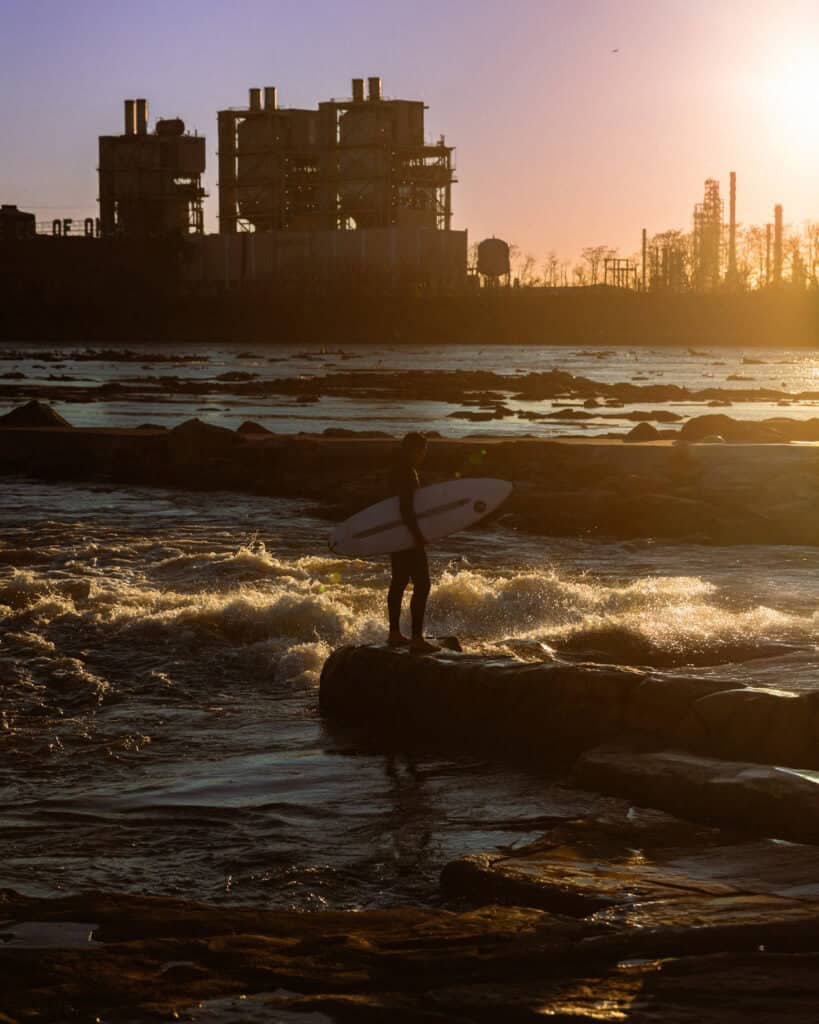
Philbrook Museum Gardens
Philbrook has been called the most beautiful place in Oklahoma, and at golden hour I won’t argue. A 25-acre Italian Renaissance villa built in 1919, with formal terraced gardens inspired by Villa Lante outside Rome. It looks like you drove five hours to a European destination, not fifteen minutes from downtown.
The shot is the mirror pond at the base of the triple-ramped terrace. That pond was designed to be a reflection surface. At golden hour, the warm light turns the water rose-gold, and the geometric terracing above it gives you leading lines that run straight through the frame. Low-angle sun rakes across the stonework, the marble staircases, the grotto — every surface picks up texture and warmth that disappears under flat midday light.
I shot a couple here on a spring evening and the Portra 400 in one of my Minoltas picked up the warm stone tones and the soft green of the manicured hedges. The scans came back looking like something from an Italian travel magazine. That’s not editing. That’s film and light doing what they do when the conditions line up.
When to go: Spring and summer for lush greenery. Philbrook requires a permit for professional photography — book in advance. Popular time slots fill fast.
Centennial Park — Tulsa’s Best Skyline at Golden Hour
If Woodward is the safe golden hour photography location, Centennial Park is the dramatic one. The pond faces west toward the downtown Tulsa skyline, and at golden hour the buildings light up and double in the water. This is the canonical Tulsa skyline shot — the one on postcards, stock libraries, and fine art prints.
What makes it work is the unobstructed western horizon. No power lines, no buildings cutting the sky. Just water, city, and light.
Spring and fall give you the cleanest skies, but the real magic happens during Oklahoma’s storm season. When a thunderstorm rolls through in the afternoon and clears out by 7 PM, the sky behind downtown turns into something between a watercolor and a fire. I’ve shot here after storms with Kodak Ultramax in my Canon EOS and the scans came back with colors I wouldn’t have believed if I’d dialed them in myself. The film just recorded what was there.
When to go: Free access, no permit, easy parking. Show up forty minutes before sunset so you have time to find your angle. The light peaks fast and moves faster.
Turkey Mountain
This is the spot nobody’s writing about. Three hundred acres of wooded urban wilderness on a ridge above the Arkansas River, with western-facing ridgelines that give you panoramic views of the river valley. The sun drops right in front of you. No crowd, no permit, no noise.
Turkey Mountain rewards people willing to work for it. You’re hiking uphill, and the ridge views aren’t visible from the trailhead. You have to earn them. In mid-October through early November, the fall foliage turns the entire hillside amber and gold. The warm light at golden hour matches the warm leaves, and the whole scene goes monochromatic in the best way — layers of gold on gold fading into the river valley.
I’ve loaded CineStill 800T here in the fall and the halation from the backlit leaves gave the frames a glow that looked like they were shot through candlelight. That’s the kind of thing film does that digital can’t touch.
When to go: Peak fall color mid-October through early November. Spring for fresh green. Check trail conditions on riverparks.org — trails close when muddy. 11 PM curfew, but golden hour wraps well before that.
Downtown Tulsa’s Art Deco District
The four spots above are parks and gardens. This one is concrete, stone, and terra cotta — and at golden hour, the downtown Art Deco district might be the most underrated photography location in Tulsa.
The 320 South Boston Building is clad in gold and cream terra cotta. At golden hour, the warm light matches the building’s own color and the whole facade glows. The architects in 1920s Tulsa were building with oil money and zero restraint, and their ornamentation catches raking light in ways that modern glass towers can’t.
Two blocks away, the Boston Avenue United Methodist Church — a National Historic Landmark with a 225-foot limestone tower — faces west. The low-angle light hits the limestone and the carved detailing pops with shadows and warmth. It’s one of the most photogenic buildings in Oklahoma, and most people drive past it every day without looking up.
For elevated angles, the upper floors of downtown parking garages give you skyline views with golden light behind you, lighting the buildings from the front. The Art Deco details pop especially hard on Kodak Ultramax — the saturated color handles ornamental stonework and terra cotta the way it was meant to be seen.
When to go: All seasons, but winter gives the cleanest shadows on architectural detail. No permits needed for exterior photography. The whole district is walkable.
These five spots are where Oklahoma’s golden hour does something you can’t replicate anywhere else. The light here is heavier, warmer, and more dramatic than what you’ll find in drier or flatter landscapes. And when you’re shooting on film, that light gets recorded with a richness that makes every frame feel like something worth keeping.
Half the work is the light. The other half is knowing where to stand and when to press the shutter. Want to see what golden hour looks like through a Minolta STSi Maxxum loaded with CineStill 800T? Browse the portfolio. Ready to book a golden hour session? Let’s connect.
What 35mm Film Captures That Digital Can’t
Last spring I shot a couple at Philbrook right as the sun dropped behind the tree line. I had my digital camera on one shoulder and one of my Minolta STSi Maxxums loaded with Portra 400 on the other. The digital files came out clean — and the comparison between 35mm film vs digital photography hit me all over again.
The film scans came back a week later, and they stopped me cold. Same couple, same light, same moment — but the film frames felt like a memory. Something in the grain, the way the highlights rolled off her shoulder, the warmth in his skin tone that I didn’t dial in. The camera did that on its own.
I’m not here to tell you film is better than digital. I use both, and each one earns its place. But there are things film does that no amount of editing can replicate, and if you’ve ever looked at a photo and felt something you couldn’t quite name, there’s a good chance it was shot on film.
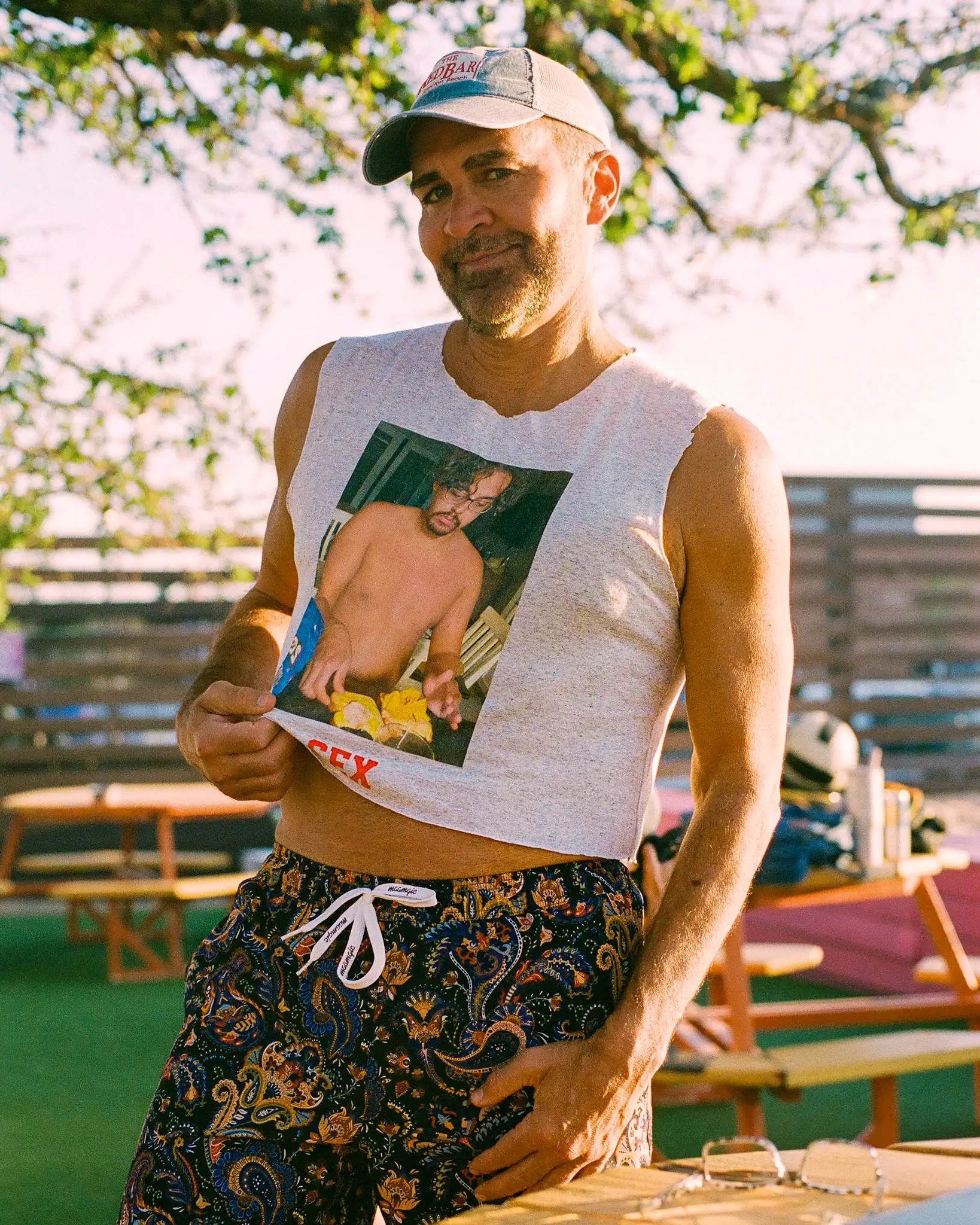
36 Frames and No Second Chances
I carry two identical Minolta STSi Maxxums and a Canon EOS SLR. On any given day, two of them are loaded — maybe CineStill 800T in one and Kodak Ultramax in the other, or Portra 400 and Tri-X. Before I take a single photo, I’ve already made a choice — which camera, which stock, which palette. Film starts asking you to commit before you even raise the camera.
With digital, I can fire off 200 frames in an hour and sort through them later. Nobody’s keeping score. Film doesn’t work that way. A roll gives you 36 exposures. No burst mode, no chimping the screen after every shot, no safety net of “I’ll just take ten more and pick the best one.”
That sounds like a limitation. It is. And it’s the whole point.
When every frame costs money and there’s no undo button, you slow down. You read the light before you meter it. You watch someone’s expression build instead of catching it mid-burst. You wait for the moment instead of spraying past it. The result is a different kind of image — not just technically, but in how it feels. There’s a stillness in film portraits that comes from the photographer being fully present, not managing a buffer.
Digital lets you capture everything. Film makes you decide what’s worth capturing. That difference shows up in the final image every time.
Grain, Color, and the Things No Filter Can Fake
Pull up any photo editing app and you’ll find a “film look” preset. Grain overlay, faded blacks, warm color shift. They get you in the neighborhood. They don’t get you in the house.
Here’s what’s actually happening when light hits film. Silver halide crystals in the emulsion react to light and create the image physically — not as data, but as a chemical change on a strip of celluloid. That process produces three things digital can approximate but never truly match:
- Grain. Film grain is random. Every crystal is a different size, sitting in a different spot. That randomness gives film images a texture that feels organic and alive. Digital noise is uniform — it’s a pattern, and your eye reads it as an error. Grain reads as texture. Your brain knows the difference even if you don’t.
- Color. Each film stock has its own way of seeing. CineStill 800T gives you cinematic tungsten tones and that halation glow around highlights that looks like a scene from a film. Kodak Ultramax punches with honest, saturated color straight out of the box. Portra 400 renders skin tones with a warmth that digital color science is still chasing. These aren’t filters applied after the fact. They’re baked into the chemistry. When I load a roll into one of my Minolta STSi Maxxums, I’m choosing a palette before the session starts.
- Highlight rolloff. Blow out a digital file and the highlights clip — hard white, zero detail, no coming back. Blow out film and the highlights roll off gently, sometimes with a soft glow called halation. It’s why overexposed film looks dreamy and overexposed digital looks broken.
You can stack presets all day. You can fine-tune curves and add grain overlays in Lightroom. Print them side by side at 16×20 and you’ll see the 35mm film vs digital photography difference in every square inch. That’s not nostalgia. That’s physics.
Why This Matters for Your Photos, Not Just Mine
Everything above might sound like photographer talk. Grain structure, highlight rolloff, silver halide crystals — interesting if you’re behind the camera, maybe less so if you’re the one in front of it. So here’s why the 35mm film vs digital photography difference matters to you.
Film images last. Not just physically — aesthetically. Digital editing trends change every few years. The heavy orange-and-teal look that was everywhere in 2019 already feels dated. Film doesn’t chase trends because it predates them. A Portra portrait from 2004 looks just as good today as it did then. Your photos won’t age out of style because they were never in style — they were just real.
Film images feel different. People notice this even when they can’t explain it. The grain adds warmth. The colors feel richer without being oversaturated. The highlight rolloff softens everything just enough. When someone stops scrolling and lingers on one of your portraits, that’s not an accident. That’s the film doing work that editing can’t replicate.
Film signals intentionality. In a feed full of AI-generated images and phone snapshots, a 35mm photograph stands apart. It tells the viewer that someone showed up with a purpose, loaded a specific roll for a specific reason, and made 36 deliberate choices with no safety net. That signal matters more now than it ever has. Your audience is drowning in disposable content. Film is the opposite of disposable.
I shoot digital when speed and volume matter. But when someone wants portraits that feel like something worth framing — images with weight, warmth, and a shelf life measured in decades — I reach for the Minoltas and a few rolls of film.
The Moment Deserves the Medium
That’s the real difference between 35mm film and digital photography. Digital captures the moment. Film captures how the moment felt.
Both have a place in my bag, but they don’t do the same thing — and the difference is something you’ll see in your images for years to come.
Want to see what film looks like in practice? Browse the film work. Ready to talk about whether film is right for your session? Let’s connect.
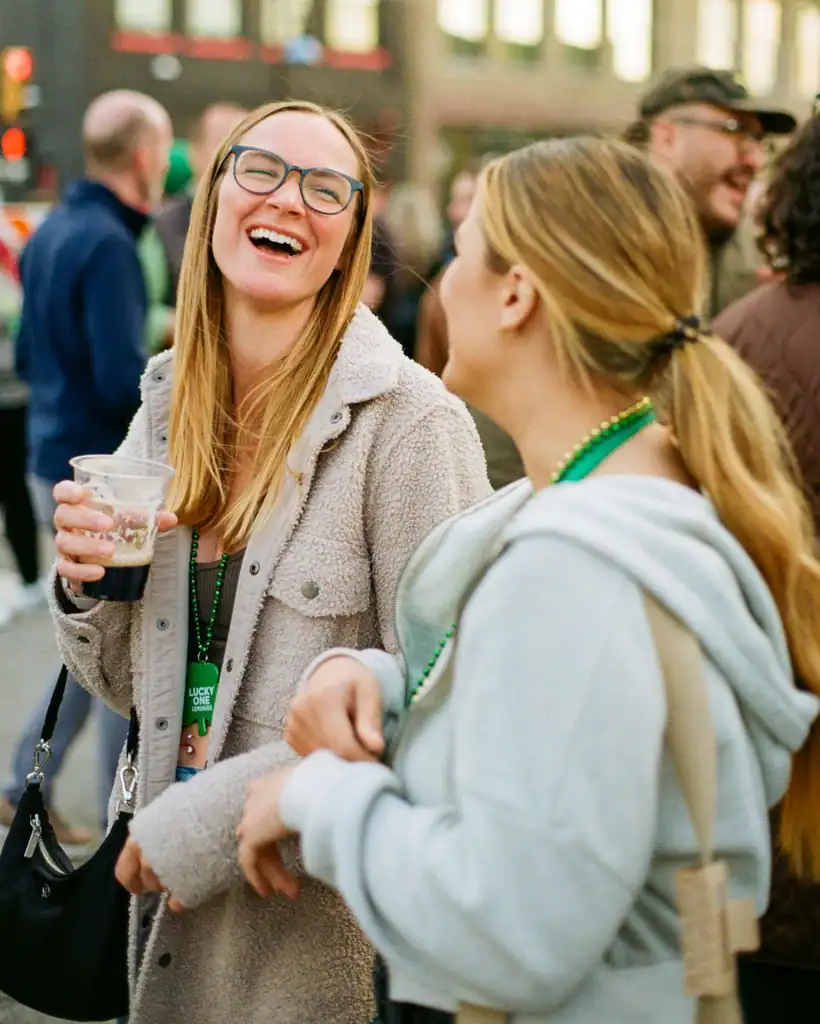
Most businesses pick their photos the same way they pick office supplies. Fast, cheap, whatever looks close enough. Then they wonder why their website feels like everyone else’s.
I’ve spent ten years in front of cameras and behind them. The difference between a brand people remember and one they scroll past almost always comes down to the images. Not the logo, not the copy. The photos. Custom photography isn’t a nice-to-have. It’s the first thing your audience actually sees — and the last thing they forget.
Stock Photos Are Brand Camouflage
Open your website. Now open your competitor’s. If you’re both using the same smiling-people-in-an-office shot from Shutterstock, you’ve got a problem neither of you can see.
Stock libraries hold millions of images, but businesses grab from the same top results. Your header photo might be living on hundreds of other websites right now. Your audience doesn’t clock it consciously, but they feel it. Something about your site feels generic. Safe. Forgettable.
Here’s what that costs you:
- Trust erodes before the first click. Visitors land on your page and something doesn’t line up. The copy says “personal, hands-on service.” The photo says “we bought this for $15.” That gap registers, even if they can’t name it.
- You train people to scroll past you. Stock triggers pattern recognition — “this is filler, skip it.” The same way you stop seeing banner ads, your audience stops seeing your brand.
- You lose the one thing that’s actually yours. Your team, your space, your product, the way afternoon light hits your storefront. Stock can’t capture any of that. Only your camera can.
I’ve worked with small businesses across Tulsa who had solid services and real stories to tell. Their websites looked like templates because the photos were templates. The moment we swapped stock for real shots — their actual crew, their actual space, golden-hour light on their actual building — the whole brand snapped into focus.
Stock isn’t cheap. It’s expensive, because it costs you the thing you can’t buy back: recognition.
What Custom Photography Actually Gets You (And What the Process Looks Like)
The benefits aren’t abstract. They show up in places you can measure.
Engagement goes up. Social posts with original photos consistently outperform stock. Not by a little. People stop scrolling for faces and places they haven’t seen before. Your audience can tell the difference between a real moment and a purchased one.
Brand recognition gets sharper. When every image on your site was made for you, your visual identity locks in. Colors, tone, setting — they all match because they all came from the same lens, the same light, the same session. That consistency compounds. People start recognizing your brand before they read a single word.
Trust builds faster. Potential customers want to see who they’re hiring. Real photos of your team, your process, your space — that’s proof. Stock is a claim. Custom is evidence.
The process is simpler than most people expect. We talk about your brand, pick a location, and shoot — no stiff posing, just real direction and honest reactions from someone who spent a decade on the other side of the lens. You walk away with a curated gallery of edited images that actually work across web, social, and print.
The Film Angle — Custom Work That Carries Weight
Custom photography separates you from the stock crowd. Shooting it on 35mm film takes it somewhere else entirely.
Film forces a different kind of session. No motor drive, no burst mode, no “I’ll fix it in post.” You get 36 frames per roll. That constraint changes everything — the way I compose, the way I wait for light, the way I watch your expression before I press the shutter. Every frame is a decision, not a reflex.
What you get from that process looks different too:
- Grain instead of pixels. Film grain has a texture that no digital filter can replicate. It’s organic. It gives portraits warmth and depth that feels real because it is.
- Color that breathes. Kodak Portra renders skin tones with a richness that digital color science is still chasing. Fuji 400H gives you cool, airy tones that feel like early morning. The film stock itself becomes part of your brand’s palette.
- Weight. There’s no other word for it. A 35mm image carries a sense of permanence that a JPEG doesn’t. Your audience feels it even if they can’t explain why.
For brands, this goes beyond aesthetics. Film signals intentionality. It tells your audience that someone slowed down and made deliberate choices about how to represent your business. That signal cuts through the noise of AI-generated content and templated feeds better than anything else right now.
I shoot both digital and film. Some projects call for speed and volume — that’s digital. But when a brand wants images that stop people mid-scroll, images with a quality that’s impossible to fake, film is the move.
Your Photos Are Your Brand’s First Impression
Your photos are the first thing people notice and the last thing they remember. Stock trains your audience to forget you. Custom gives them a reason to stay.
Want to see what intentional work looks like? Browse the portfolio. Ready to talk about your brand? Let’s connect.